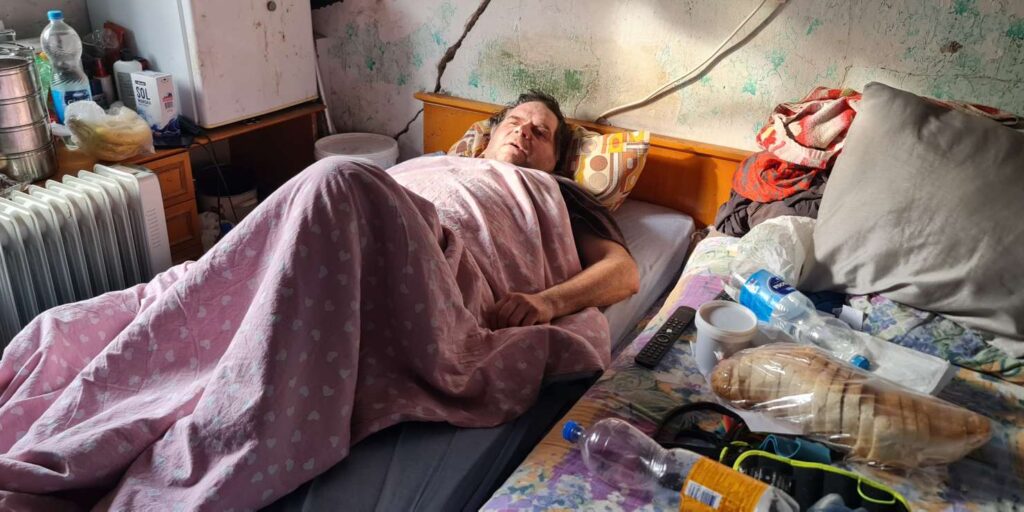
Nevenka Mihelčič Semolič recounts everything she experienced during visits to her mother, Cecilija Avanzo, at the Janez Krstnik Home in Trnovo, Ljubljana, under the leadership of priest Anton Kompare. She documented her mother’s wounds and injuries with photographs. The Chamber also found multiple irregularities. Meanwhile, the police have already forwarded the report on suspected abuse at the institution to the prosecution. The priest, however, responds: “This is nothing at all!”
“Open your mouth and swallow, and hurry to Žale.” This is just one of the insults allegedly endured by resident Cecilija Avanzo while receiving care at the Janez Krstnik Home in Ljubljana. She had lived in the Church-run facility for nine years. Until 2020, she was still mobile, but due to advancing dementia, she required assistance with care and feeding. Her daughter, Nevenka, visited her regularly and helped as much as possible to make her mother’s stay as pleasant as possible.
During the COVID-19 pandemic, Nevenka began noticing changes in her mother. “One day, my mother was all scratched up. She had deep, bloody wounds from her fingernails. They tried to change her clothes forcefully. Other employees told me this because there are also many good people working there,” Nevenka recalls her mother’s suffering. She did not remain silent but demanded explanations from those responsible, to no avail. She discovered that the injury was not officially recorded, which led her to suspect that “the injury was more than deliberately inflicted.”
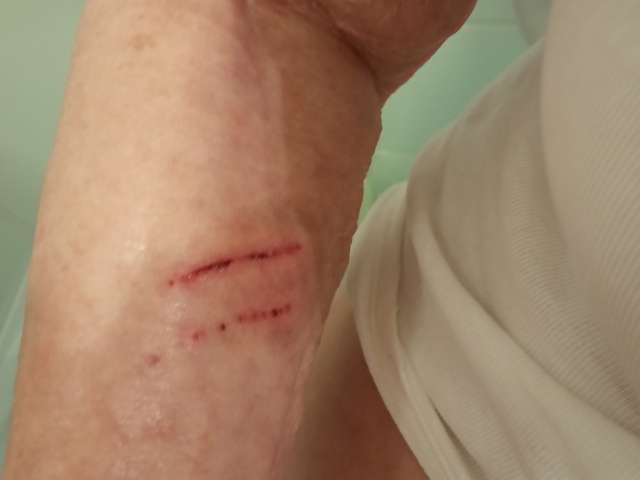
This is a photograph of the wound that Nevenka managed to capture as evidence. She filed a complaint with the Social Chamber, which, in decision no. 2076/2020-SZS/UG-NG, dated November 9, 2020, found the complaint justified and ordered the home’s director to implement “additional training and education for the management staff” and “educational content in the field of communication.” However, Nevenka herself then experienced backlash from the home’s director, Anton Kompare. “Take your mother home; why is she still here if you are not satisfied!” she recalls his words. As for the scratches, he believed that “determining and assigning blame would cause more harm than the scratch itself, as workers might lose their motivation to work,” Nevenka explains in shock. “The nurse who initially persistently denied the injury and even threatened anyone who would expose it later resigned.”
A year later, she noticed another wound on her mother. She was horrified. Her heel had turned black, and the skin was necrotic. “Before they amputated my mother’s leg, the medical staff at the home finally called an emergency doctor.” Nevenka admits that in her shock at seeing her mother’s black, rotting wound, she was not polite. She demanded answers but says she never received any. Following the doctor’s instructions, she cared for her mother’s leg twice daily for two months and managed to save it.
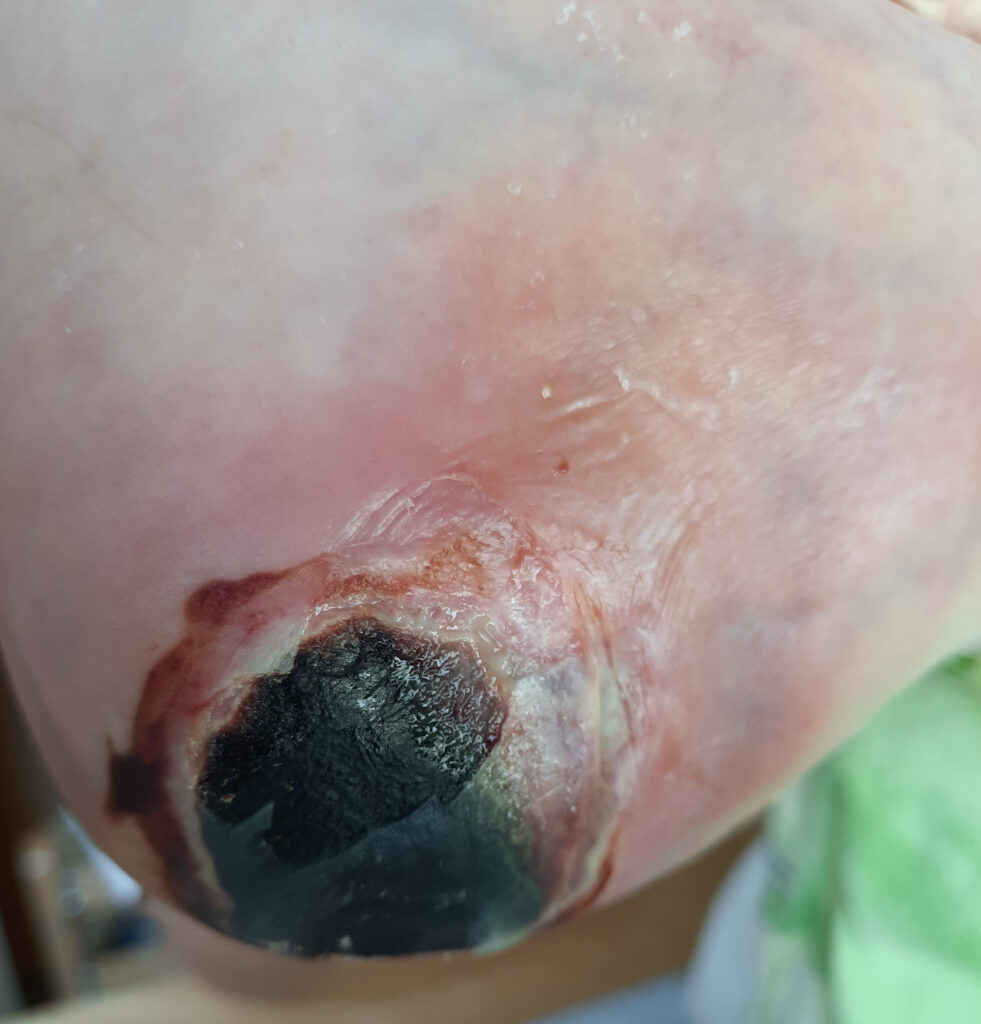
Last spring, she noticed a bloodied bandage on her mother’s leg. When she unwrapped it, she was appalled by the sight of the wound. “I was rightfully upset. Due to neglect, the wound had turned into a horrific injury because it was not properly or promptly treated. I took my mother to plastic surgery four times. A doctor there told me that such injuries should not happen.” Her mother’s wound never fully healed. The social inspection conducted an audit in July last year but found nothing.
“My conscience compels me to speak out about what happened.”
Even though her mother had dementia, Nevenka began noticing changes in her after experiencing physical abuse. “She was depressed. The black leg and other wounds caused her pain, and she had to take painkillers constantly. I watched my mother suffer; her suffering was inhumane.” She could not keep her mother at home because of her dementia; she was prone to wandering and could have met a tragic end. But after everything, Nevenka now says she would have acted differently. “Had I known my mother would experience such neglect, I would not have placed her in the home.”
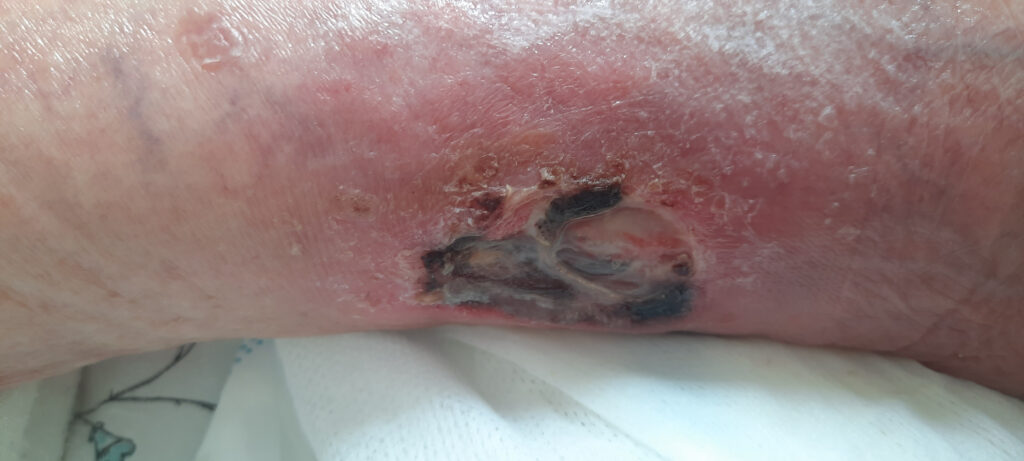
Nevenka is also pained by the verbal abuse her mother endured during her care. Insults, being told to “go to Žale,” and force-feeding with words like “Come on, open your mouth” were surely heard and likely understood by her mother, something she cannot forgive the home’s leadership for. She meticulously documented all the irregularities concerning her mother’s care at the home since 2020 and filed complaints with the relevant inspections. She also reported the head nurse, Tina K., for suspected misconduct.
“I decided to speak out because my conscience compels me, and I must tell what happened. During this time, I came to understand the work in a nursing home, which is quite demanding and requires a great deal of compassion, patience, and love for the elderly, frail, demented, and immobile people. I have met many people who truly care for the elderly with love, and some of them are underpaid,” she says.
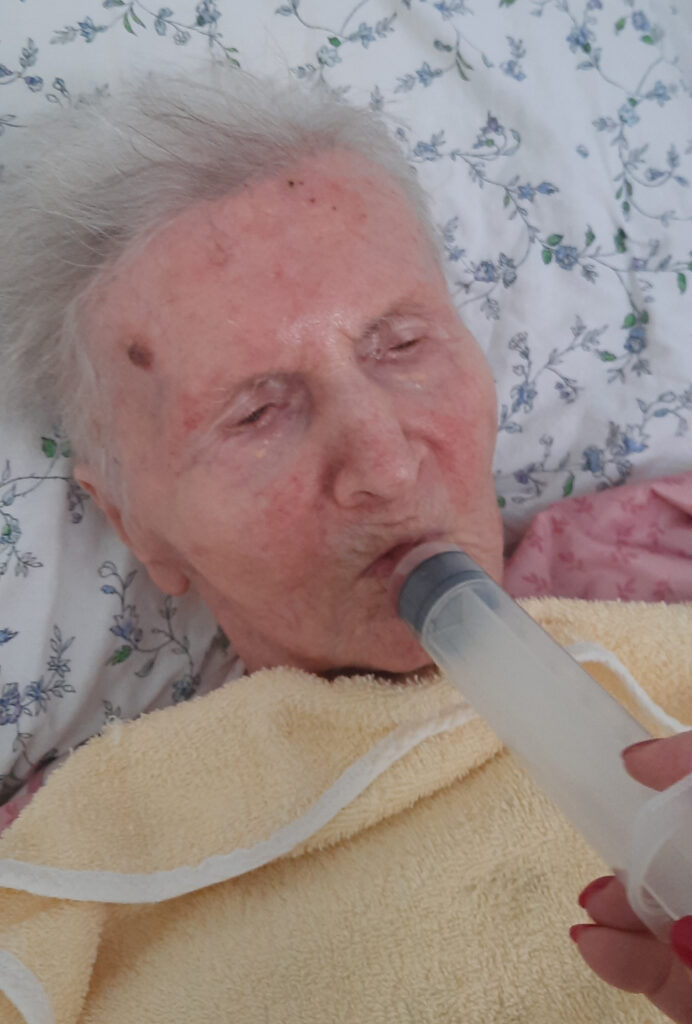
After gathering all the information, the police submitted a report to the competent District State Prosecutor’s Office in Ljubljana this month under paragraph 10 of Article 148 of the Criminal Procedure Act. The prosecutor’s office confirmed receipt of the police report, stating, “We cannot provide any further information at this stage of the proceedings.”
The Chamber Found Irregularities
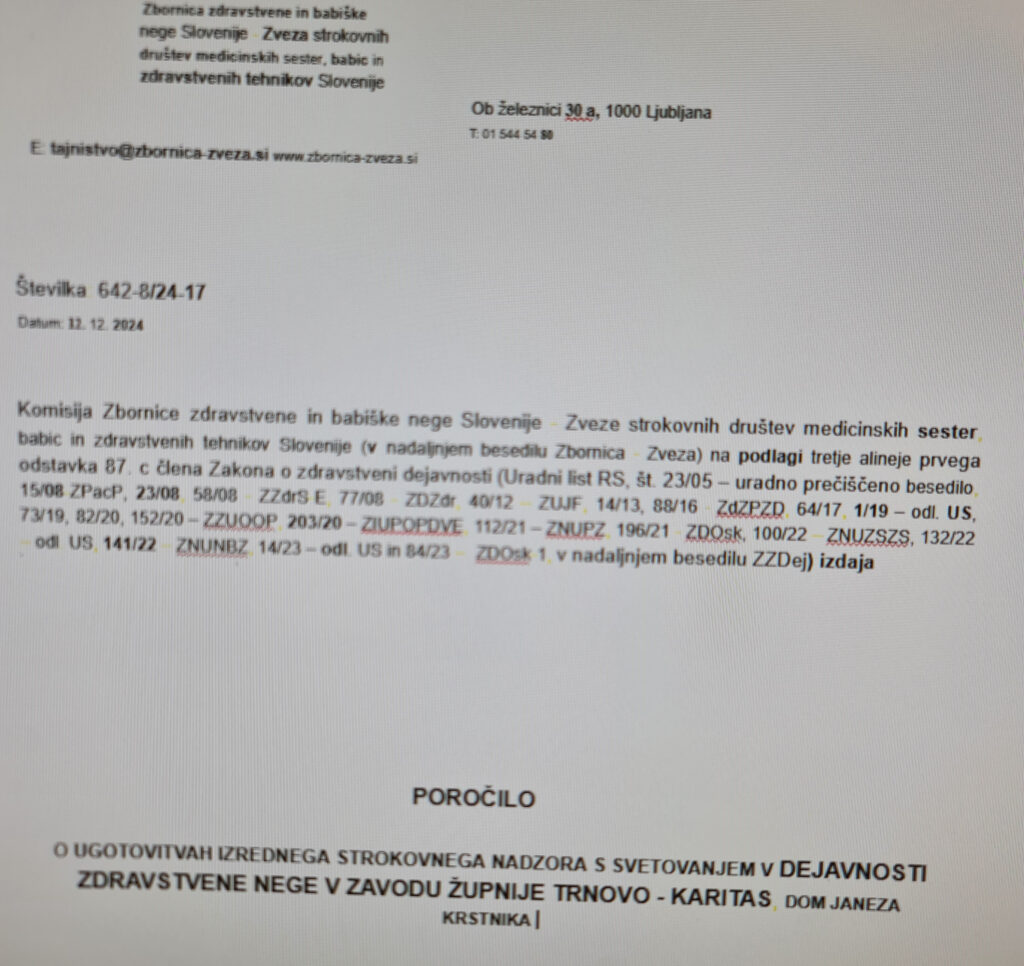
The Chamber of Nursing and Midwifery of Slovenia issued a report in December last year, a month after Nevenka’s mother passed away, on the findings of an extraordinary professional oversight at the home, which took them eight months to complete. They found multiple irregularities, including improper wound care, medication errors, and a lack of adherence to clinical guidelines. The home was ordered to rectify these deficiencies immediately and provide proof within three months.
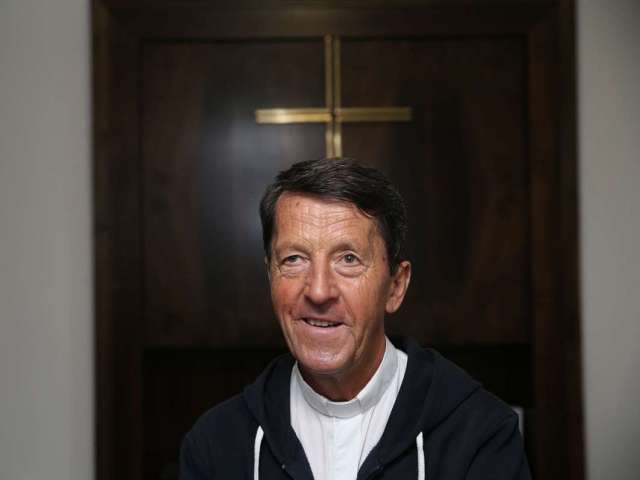
Father Kompare: “This is nothing at all!”
While the Chamber was still deliberating, Anton Kompare, the home’s director, sent a letter to various recipients accusing Nevenka Mihelčič of bullying, rude behavior, hostility, and severely endangering the home’s operation and her mother’s health. In the letter, he also demanded that she take her mother home. He wrote: “She roamed around the home looking for confirmation of her idiotic attitude … Every day she creates a tense and hostile atmosphere … She acts as if she owns the home and is responsible for it.”
This contradicts what is stated on the home’s website: “Caring for a person is one of the greatest blessings and the most beautiful things we can do. It is not a job; it is a mission … We value the relatives equally, with whom we strive to establish open, genuine relationships and offer opportunities for them to participate in their loved one’s care.”
Despite growing evidence, Kompare dismissed the allegations, stating: “This is nothing. It is slander and damages the workers. We cared for the mother for so many years, and now the daughter wants to harm the home. She should be grateful that we protected her mother with such tenderness and kindness. In the end, not even a thank you. A normal person would not have such an attitude.”
A Church Institution Receiving 10 Million in Public Funds
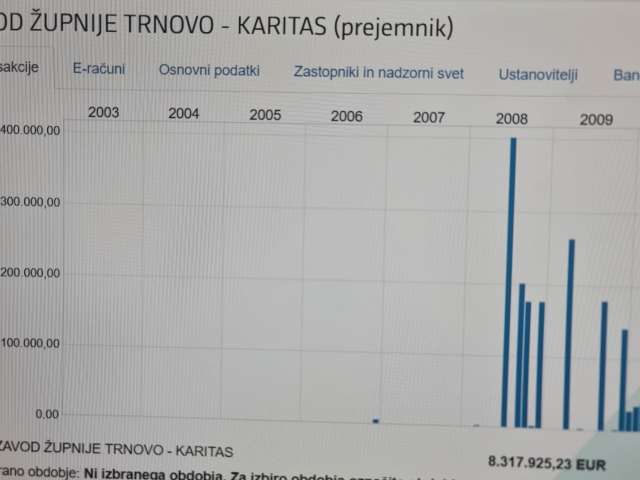
The Janez Krstnik Home operates as a private institution with a state concession and receives public funding. From 2008 to the present, the home has received €2.8 million in public funds, while the associated Trnovo Parish Institute received an additional €8.3 million. The cost of care in the home ranges from €30 to €50 per day, with extra charges for private bathrooms and apartments. Nevenka paid the equivalent of a small apartment for her mother’s care over the years. “I paid for services that she never received.” She often had to ensure her mother was properly fed, hydrated, and cared for.
.
“I will not forgive myself if these issues are swept under the rug. I told my mother that I would one day expose everything she endured,” Nevenka insists.